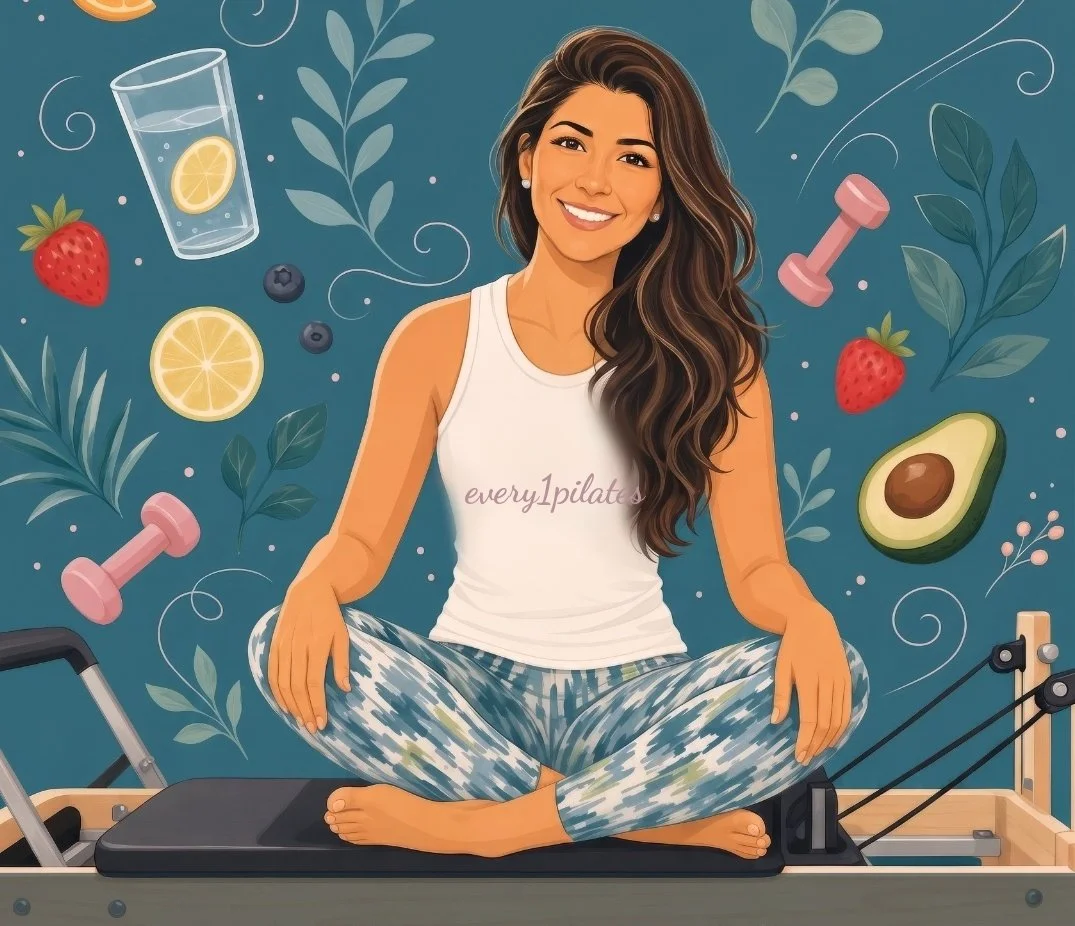
Contrology: What Pilates Was Actually Created For
This post is part of a 5-step series —
start here if you're new.
Last week we closed out Step 1. You learned that your breath is a switch — and that the second things get hard, most of us flip it off and brace. This week we move into Step 2, and here's the promise I made on the map: each step doesn't replace the last one. It carries it forward. So the breath you just learned? Bring it with you. We're about to give it something to do.
Welcome to Pilates.
But before a single exercise, I want to tell you what Pilates actually is — because almost everything you've heard about it is either half true or completely backwards.
He didn't call it “Pilates”
Joseph Pilates didn't name his method after himself. He called it Contrology — the study of control. Not control as in clenching, gripping, or forcing. Control as in awareness: knowing where your body is, what it's doing, and how to move it on purpose instead of by accident.
That word matters, because it tells you the whole intention. This was never designed to be a workout you survive. It was designed to be an education you keep — a way of teaching the mind and the body to work as one unit, so that everyday movement gets easier, not just your hour on the mat.
And the very first tool of that education is the one you already have. Breath. Joseph called it the first thing a baby does and the last thing we do — and he built it into the foundation of every exercise, not as decoration, but as the thing that organizes the movement.
What it was actually created for
Contrology wasn't born in a boutique studio. Joseph developed much of it while interned during World War I, working with people who couldn't get up — rigging resistance to hospital beds so bodies that were stuck could still move, still rebuild, still get blood and breath flowing.
That origin tells you everything. This is a method built to meet a body where it is — injured, deconditioned, tired, older, brand new — and rebuild it from the inside out. Not to punish the body it wishes it had.
Which is exactly why it fits the way I teach, and the whole idea behind this project: there's nothing new under the sun. The things that keep us well have been working for a hundred years. We just forgot to do them in order.
Why this is Step 2, not Step 1
Here's the order, and the order is the whole secret. Breath came first because it tells your nervous system you're safe. Now Pilates takes that calm, organized breath and uses it to organize movement — specifically, the movement of your spine and the deep stabilizing muscles most workouts skip entirely.
This is where your body learns control before it ever learns load. You can't safely add strength (that's Step 3) to a body that doesn't yet know how to stabilize itself. Pilates is the bridge — breath on one side, real-world strength on the other.
Skip it, and you build power on top of a wobble. Honor it, and everything after gets safer and more effective. That's not a sales pitch. That's just the order.
Try this
You don't need equipment or a class to feel what Contrology means. Sit or stand tall. Take the long, slow exhale you practiced in Step 1 — and as you breathe out, gently draw your low belly in toward your spine, like you're zipping up a snug pair of jeans. Not a hard clench. A quiet engagement.
Feel that? That subtle connection between breath and your deep core — that's the seed of every Pilates movement there is. Everything we'll build over the next few weeks grows from that one quiet point of control.
That's Contrology. Not the hundred fancy exercises. The awareness underneath them.
Next Thursday we go deeper into Step 2 with the six principles that turn a pile of exercises into an actual system — the rules that change everything once you understand them.
Love, P.
Educational content — not a substitute for medical care.